E-mail Us: market1@hotoheat.com Call Us On: +86-15366416606

- All
- Product Name
- Product Keyword
- Product Model
- Product Summary
- Product Description
- Multi Field Search
Views: 0 Author: Site Editor Publish Time: 2026-08-09 Origin: Site
The pulp and paper industry is undergoing an unprecedented transition toward electrified and hybrid heating models. This shift is driving the global industrial process heating market from $13.36 billion toward a projected $17.47 billion by 2032. Mill environments present a unique convergence of technical challenges. Facility operators need hyper-precise temperature control to ensure product quality, combined with highly corrosive chemical exposures, high-humidity operating environments, and frequent facility voltage fluctuations. Specifying the correct industrial process heaters requires a rigorous evaluation of application-specific heat transfer media, metallurgy, and control mechanisms. You must ensure operational reliability, maximize decarbonization ROI, and prevent costly unplanned downtime.
Metallurgy Dictates Lifespan: Selecting the correct sheath material (e.g., Incoloy, 316 Stainless Steel) is critical to surviving exposure to harsh chemicals like black liquor and high-humidity environments.
Precision Prevents Product Defects: Accurately sized electric duct and circulation heaters provide the exact ambient and process temperature control required to prevent paper curling, expansion, and inconsistent finishes.
Infrastructure Resilience is Mandatory: Heavy industrial mills experience power inconsistencies; specified heaters and their control panels must be engineered to endure and operate through voltage fluctuations.
Customization Over Commoditization: Off-the-shelf units rarely meet the strict hazardous location certifications (NEMA 4X/7) or exact watt-density requirements necessary for safe, long-term mill operations.
Decarbonization Drives Competitiveness: Transitioning to electrified and hybrid process heating systems improves domestic manufacturing competitiveness by reducing emissions and optimizing energy efficiency.
Temperature variances directly correlate with product defects in paper manufacturing. Inconsistent heat application causes paper curling, unwanted expansion, and uneven moisture profiles across the sheet. When thermal systems underperform during the pressing and drying stages, facilities experience significant financial impacts due to energy waste and process bottlenecks. Operators must maintain strict thermal tolerances to keep the paper web moving at optimal speeds without compromising the structural integrity of the final product.
A drop in temperature by even a few degrees during the drying phase leaves residual moisture in the paper fibers. This excess moisture leads to immediate quality control rejections. Conversely, overheating causes the fibers to become brittle, resulting in web breaks that halt the entire production line. The financial fallout from these interruptions extends beyond wasted material; it includes the labor required to re-thread the machine and the energy consumed while the system idles.
Defect Type | Thermal Cause | Operational Impact |
|---|---|---|
Paper Curling | Uneven heat distribution across the web | Rejected batches, poor printability |
Web Breaks | Excessive localized heat causing brittle fibers | Line stoppage, high labor recovery costs |
Moisture Streaks | Inadequate ambient air temperature in drying zones | Inconsistent coating application, mold risk |
Mill atmospheres present harsh realities for equipment. Heaters face constant exposure to high moisture, airborne particulates, and corrosive chemical compounds like sulfates and sulfites. Power supply inconsistencies are common in heavy manufacturing. Heater elements and controllers must be rated to endure severe voltage fluctuations without failing. Standard commercial-grade equipment degrades rapidly in these conditions, leading to frequent replacements and unpredictable maintenance schedules.
Precise thermal control and moisture management also directly enhance personnel productivity. Proper ambient heating improves worker comfort and safety by reducing slip hazards and preventing airborne mold accumulation in damp areas. When you manage the environment effectively, you protect both the machinery and the people operating it.
Specify NEMA 4X enclosures to protect terminal boxes from corrosive washdowns.
Install voltage monitors and surge protectors ahead of the heater control panels.
Implement routine visual inspections of heater sheaths for early signs of chemical pitting.
Utilize sealed, moisture-resistant insulation on all external wiring connections.
Uniform heat distribution across calendering rollers is required to ensure a consistent, high-quality paper finish. Specialized insertion heaters and thermal fluid systems are deployed for accurate roller temperature maintenance, preventing surface defects on the final product. The calendering process dictates the smoothness and gloss of the paper, making thermal precision non-negotiable.
Engineers often utilize closed-loop thermal fluid systems to circulate heated oil through the hollow cores of the calendering rolls. This method provides a highly stable temperature profile across the entire length of the roll, eliminating cold spots that cause uneven compression of the paper web. Electric circulation heaters serve as the primary heat source for these thermal fluid systems, offering rapid response times to adjust for varying line speeds and paper grades.
Circulation heaters maintain the precise viscosity of black liquor and other byproducts for efficient pumping and processing. Low watt-density industrial process heaters are mandatory in these applications. They prevent localized boiling, flashing, or coking of sensitive chemical compounds on the heater sheath. Black liquor is highly viscous and prone to solidifying if the temperature drops, which can destroy pumps and block piping networks.
When heating black liquor, the fluid velocity across the heating elements must remain high enough to prevent suspended solids from baking onto the sheath. If coking occurs, the carbon buildup acts as an insulator, forcing the internal element wire to run hotter until it eventually burns out. Proper sizing and flow engineering are the only ways to ensure long-term reliability in the recovery boiler area.
Electric duct heaters provide precise ambient air temperature control in drying rooms to eliminate paper deformation. Process heaters are also used to prevent condensation within exhaust, ventilation, and heat recovery systems, protecting infrastructure from moisture damage. The massive volume of water evaporated from the paper web creates a highly saturated atmosphere that must be aggressively managed.
Duct heaters installed in the makeup air units ensure that incoming air is pre-heated to the exact temperature required to absorb maximum moisture. Finned tubular elements are typically specified for these heaters to maximize the surface area in contact with the moving air stream. This design facilitates rapid heat transfer and prevents the elements from overheating, even at high air velocities.
Immersion heaters provide necessary freeze protection in outdoor storage tanks during winter months. Process heating also plays a role in accelerating wastewater treatment and sludge dewatering before environmental discharge. Pulp mills generate massive volumes of effluent that require biological treatment, and maintaining optimal water temperatures accelerates microbial activity.
Flange immersion heaters are commonly installed directly into the sides of clarifier tanks and aeration basins. These units must be constructed with heavy-duty flanges and corrosion-resistant sheaths to withstand the aggressive nature of the wastewater. By keeping the effluent at a consistent temperature, mills ensure compliance with environmental discharge regulations and improve the efficiency of their sludge pressing operations.
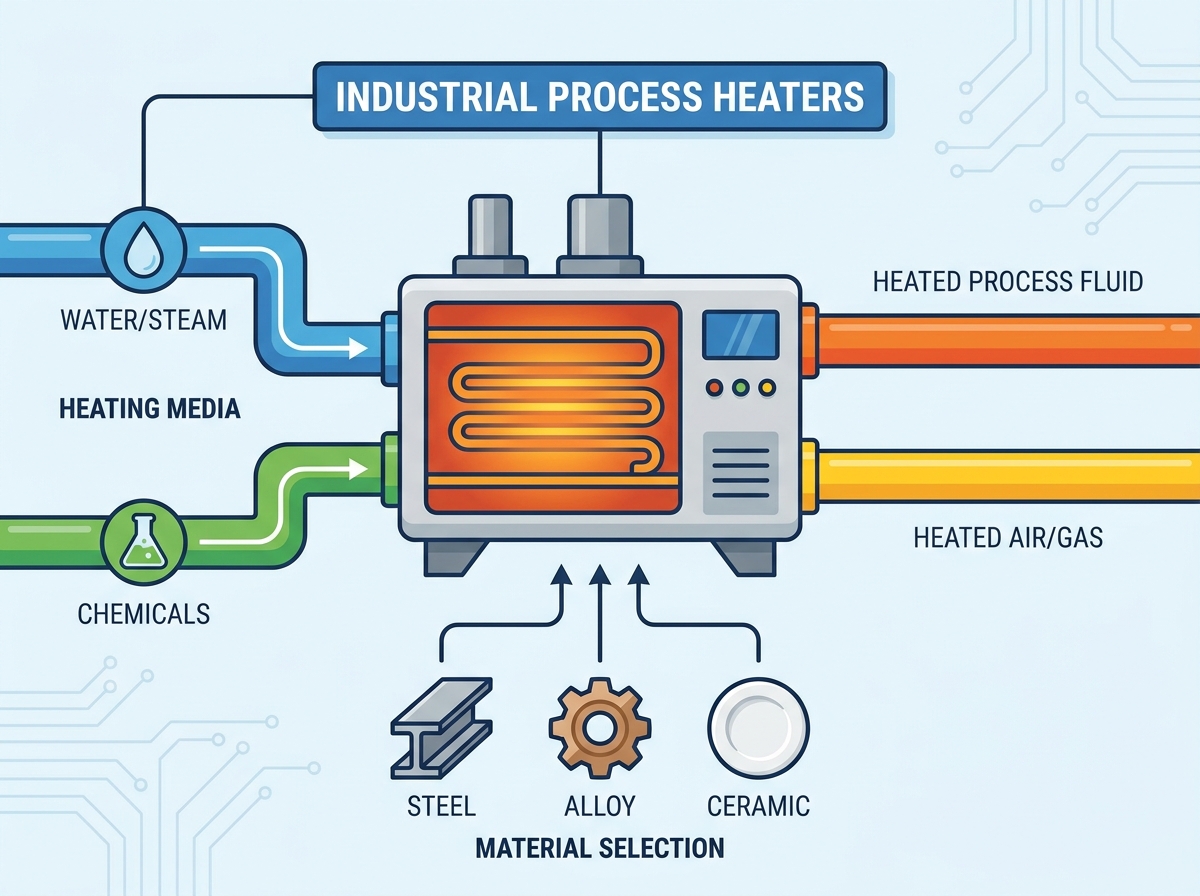
Heating water versus chemical solutions requires different baseline specifications, focusing on flow rates and heat transfer efficiency. Selecting appropriate watt densities prevents rapid scaling or chemical degradation on the heater sheath when processing corrosive liquids. Water can typically handle higher watt densities, often up to 60 watts per square inch, provided the flow rate is sufficient to carry the heat away.
However, when heating corrosive solutions like white liquor or acidic wash water, the watt density must be drastically reduced, sometimes to as low as 15 watts per square inch. This reduction lowers the surface temperature of the sheath, slowing down the rate of chemical attack and preventing minerals from precipitating out of the solution and forming a hard scale on the elements.
Closed-loop circulation heaters are designed for high-temperature, low-pressure thermal fluid applications. Thermal fluid degradation, or cracking, is a significant risk. Optimizing flow rates and utilizing baffled designs are necessary to maintain fluid integrity and prevent carbon buildup. When thermal oil cracks, it breaks down into lighter, volatile compounds and heavy carbon sludge.
The sludge coats the heating elements and the internal surfaces of the piping, severely reducing heat transfer efficiency. To prevent this, circulation heaters must be engineered with internal baffles that force the fluid to flow across the elements at a specific velocity. This turbulent flow ensures that the oil absorbs the heat quickly and moves away from the sheath before it can exceed its maximum film temperature.
Finned tubular elements in duct heaters maximize surface area to facilitate rapid heat transfer to moving air. Engineering calculations for velocity, pressure drop, and minimum airflow are required to prevent element burnout in HVAC and process drying applications. Air is a poor conductor of heat compared to liquids, meaning the heater elements must run hotter to transfer the same amount of energy.
If the airflow drops below the minimum required velocity, the heat cannot dissipate fast enough, and the internal resistance wire will melt. To protect against this, duct heaters must be interlocked with airflow switches or variable frequency drives (VFDs) on the supply fans. This ensures the heater automatically de-energizes if the fan fails or the dampers close unexpectedly.
Standard Copper and Steel offer lower initial costs but have shorter lifespans in harsh environments compared to 304/316 Stainless Steel and high-nickel alloys like Incoloy and Inconel. Specific sheath metallurgies must be matched to their corresponding chemical exposures, such as using high-grade alloys for alkaline recovery processes versus acidic wash stages. Selecting the wrong material guarantees premature failure and process contamination.
Sheath Material | Primary Application | Limitations |
|---|---|---|
Copper | Clean water heating, freeze protection | Rapidly corrodes in acidic or alkaline environments |
316 Stainless Steel | Mildly corrosive solutions, deionized water | Susceptible to chloride stress corrosion cracking |
Incoloy 800 | High-temperature air, thermal oils | Higher upfront material cost |
Inconel 600 | Severe corrosive environments, black liquor | Requires specialized welding and fabrication |
Enclosure ratings define operational capabilities in a mill setting. NEMA 4 provides standard moisture resistance. NEMA 4X adds corrosion resistance for chemical areas. NEMA 7 enclosures are explosion-proof, required for areas with combustible dust or gases. You cannot cut corners on terminal enclosures; moisture ingress is a leading cause of electrical shorts in industrial heaters.
In the pulp and paper industry, the ambient environment is often saturated with steam and airborne chemicals. A standard NEMA 1 indoor enclosure will fail within weeks. Specifying NEMA 4X stainless steel enclosures ensures that the sensitive electrical connections remain dry and protected from the corrosive atmosphere, drastically extending the operational life of the heater.
Engineers must balance achieving rapid heat-up times with maintaining a safe maximum allowable sheath temperature. Over-specifying watt density leads to premature element failure, fluid degradation, and increased maintenance cycles. The calculation requires a thorough understanding of the specific heat, specific gravity, and flow rate of the medium being heated.
You must also account for heat losses through the piping and tank walls. A common mistake is sizing the heater based solely on the steady-state operating requirements, ignoring the massive amount of energy needed to bring a cold system up to temperature during a startup. Properly sizing the total wattage ensures the system can recover quickly after a maintenance outage without forcing the elements to operate beyond their thermal limits.
Custom-engineered, fully integrated thermal skid systems offer significant advantages over piecemeal off-the-shelf component sourcing. Custom configurations improve overall system efficiency, reduce field-piping labor, and simplify single-point compliance certifications. When you purchase individual components, the burden of integration falls entirely on the facility's maintenance team.
A packaged thermal skid arrives on-site with the circulation heater, control panel, pumps, valves, and instrumentation already piped, wired, and tested. This plug-and-play approach minimizes installation downtime and guarantees that all components are perfectly matched for the specific application. It also provides a single point of accountability if troubleshooting is required.
Mechanical contactors are cost-effective but prone to wear. SCR (Silicon Controlled Rectifier) controllers provide precise, solid-state modulation for accurate temperature management. Integrating heater control panels with the mill’s overarching Distributed Control System (DCS) allows for data logging, diagnostics, and hybrid heating management. SCRs eliminate the physical arcing and mechanical degradation associated with traditional contactors.
By utilizing SCR control, the heater receives a proportional amount of power based on the exact demand of the process. This prevents temperature overshoots and extends the life of the heating elements by reducing thermal cycling. When tied into the DCS via industrial communication protocols like Modbus or Ethernet/IP, operators gain real-time visibility into heater performance, allowing for predictive maintenance before a failure occurs.
Mounting configurations impact maintenance downtime. Flanged, screw plug, and over-the-side designs offer different levels of extraction ease during planned outages. Modular heater designs allow for individual element replacement rather than full system overhauls, saving time and resources. You must plan for the eventual replacement of heating elements during the initial design phase.
If a large flange heater is installed in a tight space without adequate clearance for extraction, the maintenance team will be forced to dismantle surrounding piping just to perform a routine swap. Specifying over-the-side heaters for open tanks or utilizing isolation valves around circulation heaters ensures that maintenance can be performed quickly and safely without draining the entire system.
Scaling is a primary cause of thermal efficiency loss and element burnout in liquid heating applications. Mitigation strategies include appropriate watt density selection, fluid velocity optimization, and scheduled descaling protocols. As scale builds up on the sheath, it acts as an insulator, trapping heat inside the element.
To combat this, facilities must implement a rigorous preventative maintenance schedule. This includes periodically removing the heaters and chemically cleaning the sheaths to remove mineral deposits. Additionally, ensuring that the fluid velocity remains high across the elements helps to scour the surface and prevent scale from adhering in the first place.
Industrial electrification requires assessing the facility’s current amperage capacity, transformer health, and grid infrastructure. A phased adoption of electrified industrial process heaters allows hybrid heating designs to utilize existing steam infrastructure while maximizing green-energy cost benefits. You cannot simply drop a massive megawatt electric heater into an aging facility without upgrading the power supply.
Engineers must conduct a thorough load study to determine if the existing switchgear and transformers can handle the additional electrical demand. In many cases, a hybrid approach is the most practical solution. Electric heaters can be used to trim and precisely control the temperature at the point of use, while the existing steam boilers handle the bulk heating requirements.
Industrial process heaters are essential for achieving precise thermal control and carbon reduction targets in modern paper production. Their success relies entirely on rigorous, environment-specific engineering. Procurement and engineering teams must base vendor selection on the manufacturer's ability to customize sheath materials, engineer complete thermal loops, calculate exact watt densities, and provide NEMA-rated enclosures suitable for hazardous mill environments.
Initiate a thermal audit of existing problem areas, focusing on inconsistent drying zones or failing chemical pumps.
Assess current electrical infrastructure capacity to determine the feasibility of phased electrification.
Consult with a specialized industrial heater manufacturer to engineer custom-designed thermal systems tailored to your specific mill environment.
A: High-nickel alloys like Incoloy or Inconel, and 316 Stainless Steel, are typically best for black liquor processing due to their excellent resistance to highly corrosive alkaline environments.
A: Electric duct heaters provide precise ambient air temperature and moisture control in drying rooms, ensuring the paper dries uniformly without the temperature fluctuations that cause curling and expansion.
A: Low watt density heaters distribute heat over a larger surface area, preventing localized overheating that causes thermal oils to degrade or sensitive chemicals to boil and coke onto the elements.
A: High-quality industrial process heaters and their control panels are engineered with robust components and solid-state SCR controllers designed to endure and modulate power safely during facility voltage fluctuations.
A: NEMA 4X enclosures provide watertight and corrosion-resistant protection ideal for wet, chemical areas. NEMA 7 enclosures are explosion-proof, designed specifically to contain internal explosions in hazardous locations.
A: Custom skids arrive fully integrated with heaters, piping, valves, and controls, reducing field installation labor, ensuring optimal system efficiency, and providing single-point compliance certification compared to piecemeal components.