E-mail Us: market1@hotoheat.com Call Us On: +86-15366416606

- All
- Product Name
- Product Keyword
- Product Model
- Product Summary
- Product Description
- Multi Field Search
Views: 0 Author: Site Editor Publish Time: 2026-01-20 Origin: Site
HOTO Heating Equipment Co., Ltd. is a trusted provider of industrial electric heaters designed for a wide array of applications. Our electric heaters are crafted for superior performance in demanding environments, offering efficiency, precision, and flexibility in heating processes. In this article, we will explore the fundamentals of electric heaters, their core types, and how they contribute to industrial heating systems. Additionally, we’ll highlight the benefits of electric heaters over alternative heating methods and provide practical insights into their applications across various industries.
Electric heaters are devices that convert electrical energy into heat through a process known as Joule heating, where electrical current passes through a resistive element and generates heat. This heat is then transferred to the surrounding medium, such as air, water, or fluids, depending on the heater's application. Electric heaters are widely used in industrial settings because they provide precise temperature control, are easy to install, and offer high energy efficiency.
The principle of Joule heating forms the basis of all electric heaters. When electric current flows through a resistive material (the heating element), the electrical energy is converted into heat due to the resistance the material provides to the current. This process is highly efficient, as nearly all the electrical energy is converted to heat, making electric heaters one of the most effective methods for heating in industrial applications.
Electric heaters come in various types, each suited to specific industrial needs. These include circulation heaters, immersion heaters, and flanged heaters. Each type is designed to offer optimal heating performance for different applications, ensuring that industries can meet their heating demands effectively.
There are several types of electric heaters commonly used in industrial settings. Below, we break down the most widely used heater types, their applications, and advantages.
Circulation heaters are designed to heat flowing liquids or gases in a continuous loop. These heaters are ideal for applications that require consistent heating of fluids such as water, oil, and chemicals. They are often used in industries like chemical processing, water treatment, and oil & gas, where maintaining a stable temperature for fluid flow is critical for process efficiency.
HOTO’s circulation heaters feature a robust construction and advanced heating technology, allowing for high performance even in demanding industrial environments. The design of the heater ensures that heat is evenly distributed, preventing hot spots and ensuring the fluid remains at the desired temperature throughout the system.
Immersion heaters are designed to be directly immersed in the fluid they are heating. These heaters are ideal for heating water, oils, chemicals, and other liquids in tanks, vats, or other closed containers. HOTO’s immersion heaters are available in various sizes, wattages, and materials to accommodate the specific needs of industrial applications.
Immersion heaters are widely used in industries like food processing, water treatment, and chemical manufacturing. Their design allows for efficient heat transfer, ensuring that the fluid is heated quickly and uniformly. Immersion heaters are especially effective in applications where high power density is required to rapidly heat large volumes of liquid.
Flanged heaters are another common type of electric heaters used in industrial settings. These heaters are mounted on flanges and inserted into tanks, pipes, or large vessels. The heating elements are usually enclosed in a robust casing that can withstand the pressures and temperatures of high-demand systems.
Flanged heaters are particularly suitable for large-scale heating applications, such as in large chemical reactors, heat exchangers, or food processing equipment. These heaters are highly efficient at transferring heat to the surrounding fluid and are often used in industries that require high-temperature processes.
Electric heaters are used in a variety of industrial applications due to their ability to provide precise temperature control, energy efficiency, and low maintenance costs. Below, we highlight some of the main reasons why electric heaters are favored across industries.
One of the key advantages of electric heaters is their high energy efficiency. Unlike traditional heating methods that rely on combustion or steam generation, electric heaters convert nearly all electrical energy into heat, ensuring minimal energy loss. This makes electric heaters an attractive option for industries looking to reduce energy consumption and lower operational costs. Furthermore, electric heaters allow for precise temperature control, reducing the need for excessive energy usage and improving overall process efficiency.
The ability to control temperature precisely is one of the main reasons industries choose electric heaters. With electric heaters, operators can set and maintain a consistent temperature that is critical for many industrial processes. For example, in chemical manufacturing or food processing, temperature fluctuations can affect the quality of the product, making precise heating essential. With electric heaters, manufacturers can maintain consistent process temperatures, ensuring high-quality output and minimizing waste.
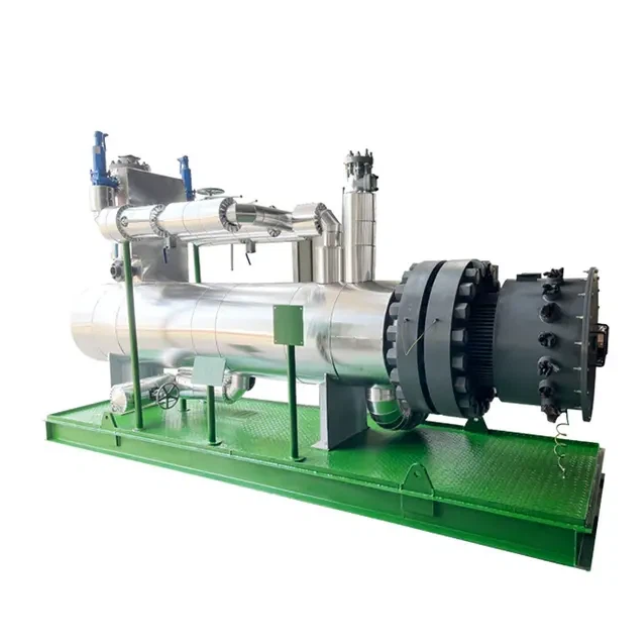
While other heating methods, such as steam or gas-based systems, are also commonly used in industrial applications, electric heating offers several advantages that make it a preferred choice for many industries.
Electric heaters are generally more compact than traditional heating systems, which often require large equipment and space for combustion or steam generation. Electric heaters can be installed in tight spaces, making them ideal for industries that have limited floor space or need to heat smaller volumes of fluid. This space-saving design is particularly beneficial in industries like food and beverage processing, where equipment size is a critical factor.
Another significant advantage of electric heaters is their ease of installation. Unlike fuel-based systems, which require extensive piping, fuel tanks, and venting systems, electric heaters can be installed quickly and with minimal disruption to existing operations. This makes them ideal for industries looking to upgrade or replace their heating systems without a lengthy installation process or high costs.
Electric heaters are used in a wide range of industries, from chemical plants to food processing facilities. Below, we explore some of the key applications where electric heaters play a critical role in ensuring efficient and effective heating.
In chemical plants, precise temperature control is essential for maintaining the correct conditions for reactions and ensuring the safety and quality of products. Electric heaters are used in reactors, heat exchangers, and distillation columns to maintain the ideal temperature for chemical reactions. They are particularly effective in applications that require rapid and uniform heating, which is essential for achieving the desired product quality and yield.
The food and beverage industry relies heavily on electric heaters for various processes such as pasteurization, cooking, and drying. Electric immersion heaters are commonly used to heat water, oils, and other liquids used in food processing. They ensure that food products are heated consistently and safely, meeting regulatory requirements and maintaining product quality.
Electric heaters are also widely used in manufacturing facilities for heating air, liquids, or solid materials. In many cases, precise temperature control is required to ensure that materials are processed correctly. Whether it is for drying, curing, or molding, electric heaters provide the reliable heat necessary for manufacturing processes, ensuring that products are produced at optimal temperatures.
The following table compares the three main types of electric heaters and their applications, as well as their efficiency.
Heater Type | Application | Efficiency |
Electric Immersion | Liquid heating | Very High |
Circulation | Fluid flow heat | High |
Flanged | Large vessels | High |
When installing electric heaters, it is essential to follow best practices to ensure their efficiency and safety. Below are some tips for the proper installation of electric heaters:
Proper sizing: Choose the right size heater for the application to ensure optimal performance.
Secure mounting: Ensure that the heater is properly mounted to avoid vibrations or disconnections.
Regular inspections: Inspect heaters regularly to check for wear or damage, and replace components as needed.
Temperature control: Always use temperature sensors and thermostats to maintain the correct heating temperature.
In conclusion, electric heaters from HOTO Heating Equipment Co., Ltd. provide a highly efficient, reliable, and energy-efficient solution for a wide range of industrial applications. Their ability to provide precise temperature control, combined with their compact design and ease of installation, makes them an ideal choice for industries looking to optimize their heating systems. Whether used in chemical plants, food processing, or manufacturing facilities, electric heaters play a crucial role in improving process efficiency and product quality. To learn more about how HOTO can provide the perfect electric heater solution for your business, please contact us today!
Q1: What types of electric heaters are available for industrial use?
A1: Electric heaters are available in various types, including immersion heaters, circulation heaters, and flanged heaters, each suited to specific applications.
Q2: How do electric heaters improve energy efficiency?
A2: Electric heaters convert nearly all electrical energy into heat, minimizing energy loss and improving overall system efficiency.
Q3: Can electric heaters be used for both heating liquids and gases?
A3: Yes, electric heaters are versatile and can be used to heat both liquids and gases, making them suitable for a wide range of industrial applications.
Q4: Are electric heaters easy to install?
A4: Yes, electric heaters are easy to install, requiring minimal space and infrastructure compared to traditional fuel-based heating systems.


