E-mail Us: market1@hotoheat.com Call Us On: +86-15366416606

- All
- Product Name
- Product Keyword
- Product Model
- Product Summary
- Product Description
- Multi Field Search
Views: 0 Author: Site Editor Publish Time: 2026-01-30 Origin: Site
HOTO Heating Equipment Co., Ltd. specializes in providing high-performance flanged immersion heaters for a wide range of industrial applications. Our flanged immersion heaters are engineered to deliver superior heating solutions for large industrial tanks and vessels. These heaters are designed for robust, efficient heating, offering optimal performance even under the most demanding conditions. In this guide, we will explore the benefits, design considerations, applications, and operational tips related to flanged immersion heaters, specifically within industrial tank heating systems.
Flanged immersion heaters are designed to be mounted to the side of a tank, typically by attaching to a flange, which provides secure and stable positioning. These heaters are highly efficient for heating large volumes of liquid or gases and are commonly used in various industrial sectors where heating needs to be both robust and scalable. They directly transfer heat to the medium, making them highly efficient and suitable for both high- and low-temperature operations.
The structure of flanged immersion heaters consists of a heating element that is embedded into a metal sheath. This sheath is attached to a flange that can be bolted onto the tank. The flange is the main structural element that allows the heater to be securely mounted without requiring modifications to the tank itself. The element within the sheath is designed to heat the fluid directly, providing fast and effective temperature control.
This direct heating design offers several advantages, including improved heat transfer efficiency, reliability, and ease of maintenance. Whether used for heating water, oils, chemicals, or other industrial fluids, flanged immersion heaters are an ideal choice for applications that require consistent, controlled heating.
One of the key benefits of flanged immersion heaters is their ability to provide direct heat to the fluid. This direct heating eliminates the need for intermediary processes, such as steam or combustion heating, resulting in higher efficiency. The absence of heat loss during transfer ensures that energy is used more effectively, reducing operational costs and improving overall system efficiency.
The direct immersion of the heating element also ensures uniform heat distribution, which is critical for applications where consistent temperatures are required across large tanks or vessels. This is particularly important in industries such as chemicals, food processing, and water treatment, where maintaining specific temperatures is crucial to product quality and safety.
Flanged immersion heaters are widely used in various industrial applications, particularly for heating large volumes of liquid or gases in tanks and vessels. The versatility and efficiency of these heaters make them the preferred choice in several industries.
In high-pressure environments, flanged immersion heaters provide efficient heating for liquids and gases under pressure. These heaters are designed to withstand high-pressure conditions and can be tailored to meet the specific needs of high-pressure processes. Whether in chemical reactors or pressure vessels, flanged immersion heaters can maintain the required temperature, ensuring optimal reaction rates and product quality.
One of the primary advantages of flanged immersion heaters is their ability to heat large volumes of liquid or gases in tanks. This makes them an excellent solution for industries that deal with large-scale heating processes, such as in water treatment, chemical manufacturing, and industrial cleaning. Their ability to handle large volumes of fluid with minimal energy consumption makes them an efficient choice for companies looking to optimize their heating processes and reduce operational costs.
Choosing the right design and materials for flanged immersion heaters is crucial to ensure their performance, durability, and suitability for specific applications. The material selection for the heating elements and the sheath must be tailored to the fluids being heated and the environmental conditions in which the heater operates.
The sheath material is a critical component of flanged immersion heaters because it directly affects the durability and performance of the heater. Common sheath materials include:
Stainless Steel: Ideal for heating water and non-corrosive fluids, offering a good balance of strength, resistance to corrosion, and thermal conductivity.
Incoloy®: Suitable for applications involving high temperatures and aggressive fluids, Incoloy® offers superior resistance to oxidation and corrosion.
Titanium: The best choice for highly corrosive applications, particularly those involving acids, salts, and other aggressive substances. Titanium provides excellent resistance to corrosion in harsh chemical environments.
Inconel®: Known for its excellent performance in high-temperature environments, Inconel® is ideal for industries that require reliable performance at elevated temperatures.
By selecting the appropriate sheath material, industries can ensure that their flanged immersion heaters are capable of withstanding the specific conditions of their processes, ensuring both longevity and efficient performance.
The seal and flange are critical components of flanged immersion heaters, as they provide a secure and leak-proof connection to the tank. The type of seal and flange chosen will depend on factors such as the size of the tank, the type of fluid being heated, and the operating conditions.
Flanges are available in a wide range of sizes, from ANSI 3” to 14” and can be customized to meet the specific requirements of the application. Additionally, flanged immersion heaters can be equipped with high-pressure-rated flanges and explosion-proof seals for use in hazardous environments. These considerations ensure that the heater is safe to use and performs reliably under the required conditions.
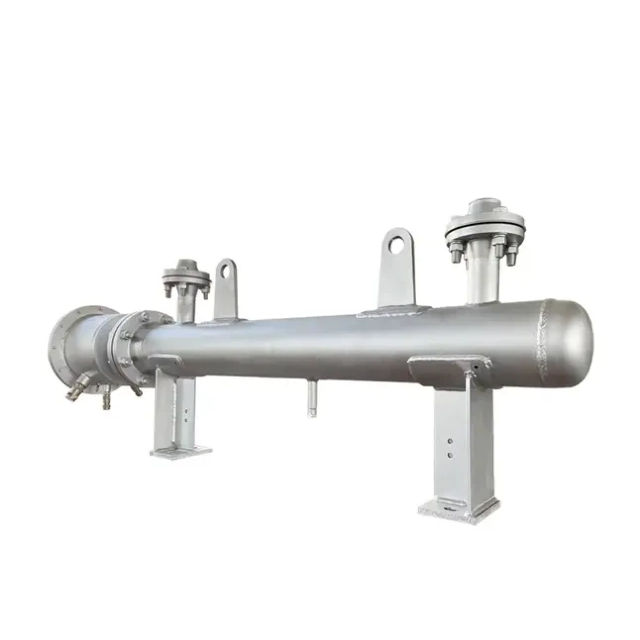
When installing flanged immersion heaters, several factors need to be considered to ensure optimal performance. Proper installation and energy usage are key to maximizing the efficiency and lifespan of the heater.
Correct Positioning: The heater must be installed in a location that ensures efficient heat transfer to the fluid. Proper positioning allows for uniform temperature distribution and reduces the risk of localized overheating.
Energy Efficiency: Flanged immersion heaters are highly energy-efficient due to their direct heating design. By choosing the correct wattage and voltage, industries can optimize energy consumption and minimize operational costs.
Safety Features: It is essential to integrate safety features, such as thermostats, thermocouples, and high-limit switches, to ensure that the heater operates safely within the desired temperature range.
The following table outlines the key specifications of flanged immersion heaters, which should be considered when selecting a heater for specific industrial applications.
Spec | Meaning | Why It Matters |
kW Rating | Power | Determines the heat-up speed |
Material | Corrosion | Impacts the heater’s lifetime |
Flange Size | Size | Ensures proper installation |
Watt Density | Heat distribution | Affects heating efficiency |
The table above provides a quick overview of important specifications to consider when selecting a flanged immersion heater. These factors help ensure that the heater is appropriate for the intended application and can provide the necessary heating performance.
To ensure the optimal performance and longevity of flanged immersion heaters, operators should follow a few key best practices:
Regular maintenance: Regularly inspect the heater for signs of wear or corrosion, especially in harsh environments where the heater is exposed to aggressive fluids.
Monitor temperatures: Use accurate temperature controls to monitor and regulate the heater’s performance, ensuring that the fluid is heated to the desired temperature.
Proper installation: Ensure that the heater is correctly mounted and secured to avoid damage to the tank or heating element.
By following these tips, industries can ensure that their flanged immersion heaters continue to perform efficiently and reliably over time.
Flanged immersion heaters offer industrial sectors an efficient, reliable, and customizable heating solution for large-scale processes. From high-pressure vessels to large volume heating, these heaters provide unparalleled performance and flexibility. Their ability to handle high-temperature fluids and harsh chemical environments, combined with ease of installation and low maintenance requirements, makes them a valuable asset to many industrial applications.
For industries seeking a high-performance heating solution, HOTO’s flanged immersion heaters provide superior durability, efficiency, and customization options. To learn more about our flanged immersion heaters and how they can enhance your industrial heating processes, please contact us today.
Q1: What are the key benefits of using flanged immersion heaters?
A1: Flanged immersion heaters offer direct heating, high efficiency, and easy maintenance. They are ideal for large tanks and vessels, ensuring consistent and reliable heating.
Q2: Can flanged immersion heaters be used for corrosive liquids?
A2: Yes, HOTO’s flanged immersion heaters are made with corrosion-resistant materials such as Incoloy® and titanium, making them suitable for heating corrosive fluids.
Q3: What industries benefit from flanged immersion heaters?
A3: Flanged immersion heaters are used in industries such as chemical processing, oil and gas, water treatment, and food processing, where large-scale, efficient heating is required.
Q4: How do I determine the right flanged immersion heater for my needs?
A4: The right flanged immersion heater depends on factors such as the fluid being heated, tank size, temperature requirements, and the specific heating application. Consult with a HOTO expert to determine the best solution for your process.


